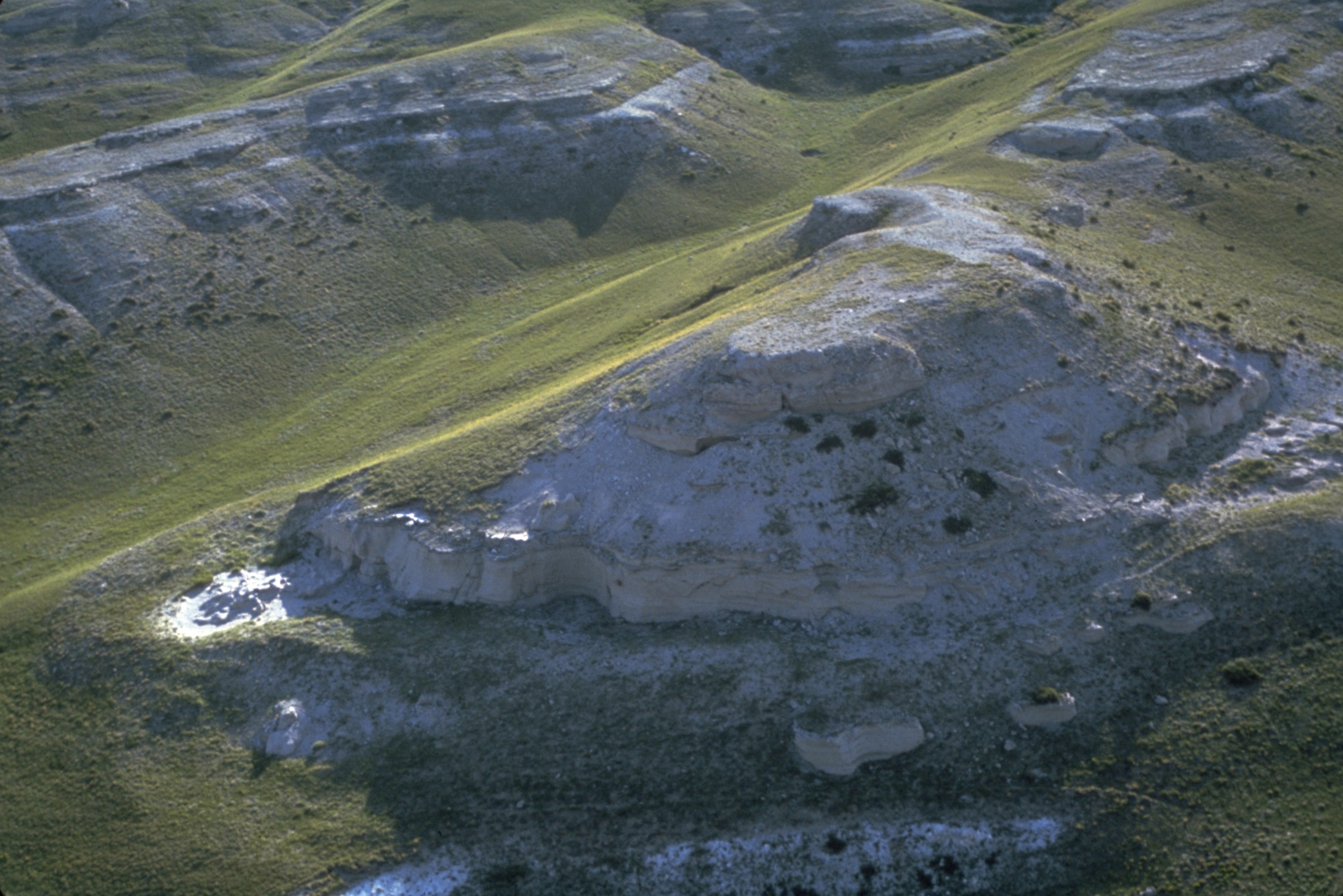
The hills along the Niobrara near Harrison look like a thousand other stretches of Nebraska prairie. They’re not. Beneath them lie some of the most important fossil beds in North America — full skeletons of Miocene mammals from 20 million years ago, species previously known only from fragments. The visitor center runs a park film and fossil exhibits, and the Daemonelix Trail (one mile) shows the “devil’s corkscrews” — spiral burrows of the ancient land beaver — while the 2.8-mile Fossil Hills Trail reaches the historic excavation sites on Carnegie and University Hills.
The unexpected half of the visit is the Cook Collection. Rancher James Cook befriended Chief Red Cloud, and the handmade Lakota gifts — artifacts given by Red Cloud and others — form one of the most respected collections of its kind. Visitors consistently call it the standout: a direct, personal relationship between an Oglala leader and a Nebraska ranching family, preserved in objects.
It’s free, it’s nearly 3,000 acres of mixed-grass prairie, and it’s the kind of NPS site that rewards the detour — off NE-29 south of Harrison. Combine it with Oglala National Grassland’s Toadstool area or Scotts Bluff for a full Panhandle day. The historic Bone Cabin (the 1910-1923 fossil crews’ base camp) is being restored, with a one-mile trail once work completes.