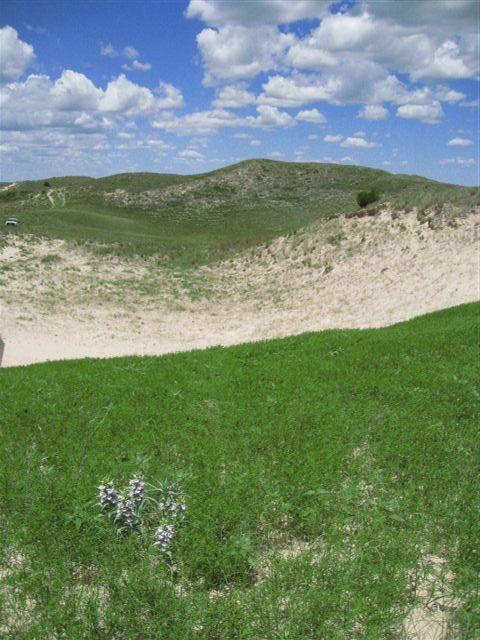
The McKelvie is the stranger half of the Sandhills: 116,000 acres of prairie grassland broken by islands of ponderosa pine, jack pine, and eastern red cedar — almost all of it hand-planted over the past 75 years. It started as Theodore Roosevelt’s 1902 Niobrara Forest Reserve, became a national forest named for former governor Samuel McKelvie in 1971, and remains a genuine working experiment: trees planted by humans that learned to spread on their own.
No fees to enter. Steer Creek Campground, in the southwest corner under ponderosa pines planted in the early 1900s, has 23 sites with a hand water pump, picnic tables, fire rings, and vault toilets — plus 8 horse corrals and the one-mile Blue Jay nature loop. The Niobrara Canoe Launch on State Spur 16F gives river access; the Lord Lakes wetland complex is recognized for outstanding fishing; Merritt Reservoir sits just southeast.
This is pronghorn, mule deer, coyote, and sharp-tailed grouse country, and spring brings grouse-viewing blinds the Forest Service sets up each season. It’s remote — directions run through Nenzel on Spur 16F or down from Valentine via Merritt Dam Road — and that’s the whole point. One of the few national forests anywhere that exists because people decided the Sandhills needed trees, and the Sandhills mostly agreed.